Home | News | Politics | Free Zone | Gallery | Guestbook | Links | Contact Us |
arrowHome arrow News arrow Articles arrow Vardavar:people splash water on each other Monday, 08 February 2010  
Login Form
Username

Password

Remember me
Forgotten your password?
No account yet? Create one


Your Web Site with Armino

Natural Skin Care Products

Music
Varouzh Aghadjanyan
Voske Vandak:
wma~2mb


Grigor Hambaryan
Sayat Nova:
wma~3mb


Lilit Sarksyan - (16 Y.)
Titanic: wma~2mb


Popular
Statistics
Members: 387
News: 349
WebLinks: 14
Visitors: 1342352
Information
 Abovyan City  Member Groups Totals
 Guests ( 5 ) Guests 5
   Totals 5


Newest Member  AdaLovelace
Today  0
This Week  0
This Month  2
 
Gallery
Random

Dedicated to Karine
New

Dance Group
Popular

Harsanik
Most Voted

Harsanik
Related Links
All About Vanadzor city
 
Donation via PayPal
  
Vardavar:people splash water on each other PDF Print E-mail
Written by Gayane Dallakyan   
Sunday, 18 July 2004

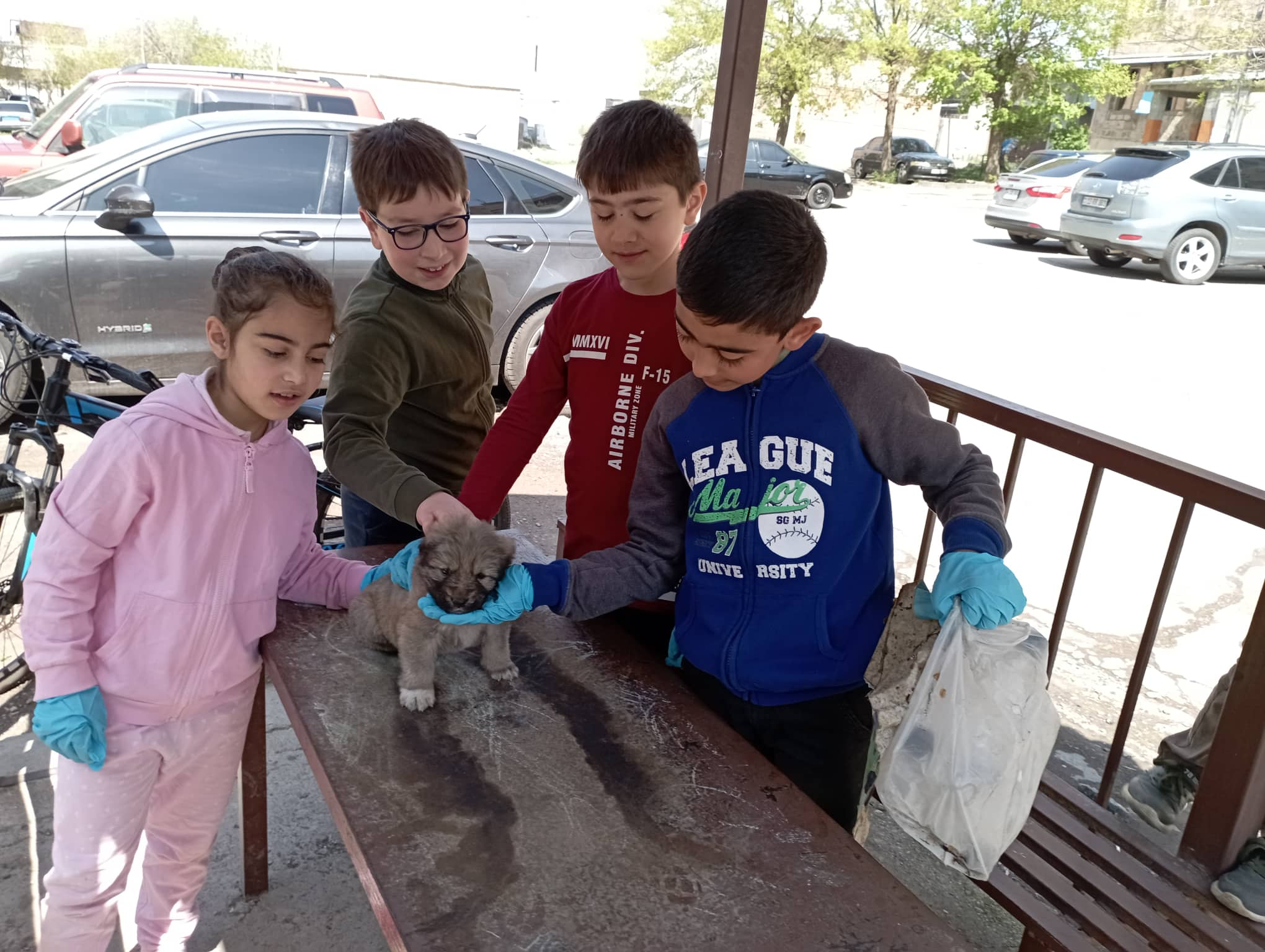
ImageDuring this lively pagan festivity in July, when the heat of the sun scorches vegetation, people splash water on each other. Water is thrown by the bucketful on anyone: no matter the age, gender, or public position.  Even submissive and quiet brides would throw water on their mothers-in-law!  Nobody is offended or angered by this: it is the accepted way to celebrate the ancient Armenian tradition of Vardavar. 


ImageThe word “vardavar” has two interpretations based on which of two pagan goddesses were worshipped: Astgheek or Anaheet. 


Astgheek (the Armenian equivalent of Greece’s Aphrodite) was the goddess of love and beauty.  Since “vard” means “rose” in Armenian, a correlation was made between this holiday and Astgheek. According to legend, her beloved Vahagn (another Armenian pagan god) was once injured in a struggle with evil. She rushed barefoot to his aid. On the way, she hurt her feet while treading over the roses and her blood turned them red. This is how red roses came into being: the flower of love was born. She had her temple, where young and old alike would go on pilgrimage to praise her, sing songs, and offer bouquets of flowers and other gifts.


On the other hand, Anaheet was the goddess of “purity, kindness, nurturing, temperance, fertility, wealth, and fullness”. She was identified with water, as a cleansing and purifying agent. In the ancient Hittite language "ooard" meant "water" and “ar” – “to wash”. These were related to Anaheet’s celebration.  

ImageThe essence of the rituals is splashing with water. On that day, water is considered to be curative and powerful. It is used to divine and foretell the future. It was superstitiously believed to be a means of driving away evil. The accompanying traditional songs, dances, and games were supplications to the gods to give water to the dry earth. People would present roses to each other and loving couples would set pigeons free. If the pigeon flew over the young girl’s roof three times then it was an omen that the man would marry the girl in the fall.


In mountainous areas, the festivities took on a different form. It was more widespread to offer animals, the first fruits, and wheat husks to each other. Pilgrimages were organized, as were feasts and festivities.  Shepherds would gather colorful flowers to make bouquets. The foreheads of cows were also decorated with flowers. When children saw a cow with a cross of flowers on the forehead, they would start singing traditional songs. With two day’s worth of food, crowds would travel to “holy” springs, taking animals that had been decorated with flowers. The animals were offered to the gods hoping to receive their grace. Young girls would take bouquets of flowers from one home to another, singing, dancing, and receiving presents. In the villages “nooree” (pomegranate) dolls “walked” around and eggs, flour, and butter were gathered. 


ImageSimilar to other holidays, Vardavar also bore the character and symbol of fertility.  Young women who were engaged made khndoom (“laughing”).  It was a small “garden” made of wheat or barley sprouts. A piece of wood with “wings” was placed in the center. An apple or pear (called Vardavar fruits) was fixed to it and was decorated with cucumbers and roses.  An old woman (who took the role of Anaheet) twirled the plate and everyone danced around it. Finally, fruits and flowers were distributed to the people. Only after this ritual, were people allowed to eat apples and pears.  Presenting apples, flowers, and other gifts, was common.


A special horse-riding game (“passaloo”) was also played.  During this horserace, young men would try to throw their competitors into the water. Young men also engaged in symbolic wrestling bouts with each other. Bulls also fought each other, while women and girls danced.


Vardavar was the only family holiday, when all the relatives would travel long distances to spend a day together. The gifts they presented to each other expressed their love and devotion. This was the day during which family ties were renewed and strengthened. 


So today, be prepared to get doused with water … and keep smiling!


Comments
Written by MERS_600 on 2005-12-06 08:55:57
Naturi lav qaxaqa eli. qo cav@ tanem Abovyan jan. kez shat em sirum. amen tari galu em chmtaces :)
Written by Lya_Lya on 2005-07-23 15:40:43
Iroq mer Abovyanum urish a eli, inchu che huysov em mi or noric ktesnenq ays orer@.
ERANI NRANTS OVKER ABOVYANUM EN
Written by hayaxjik818 on 2005-07-06 00:00:04
ERBEK VOCH MEKS CHENK TESNI AYS HAJELI U ANMRANALI OR@ MER ABOVYAN KAXAKI

Only registered users can write comments.
Please login or register.

Powered by AkoComment 2.0!

< Prev   Next >
top
  View in Armenian by Arial am, Courier am Fonts.
www.abovyan.com © 2003 All rights reserved.    Developed by Armino.